
A marketing drip is a series of automated messages delivered to prospects or customers based on time, behaviour, or data triggers. The term "drip" suggests a slow, steady flow-designed to nurture attention without overwhelming the recipient. In practice, most marketing drip campaigns are email sequences triggered when someone downloads content, abandons a cart, or reaches a milestone in the customer journey. The concept is simple. The execution is often chaotic.
The gap between theory and reality exists because most drip campaigns are built inside a single platform-usually an email tool-without connection to CRM, sales activity, advertising data, or website behaviour. Messages are scheduled based on guesswork, not outcomes. Segmentation is crude. Attribution is missing. And when a prospect converts, the drip keeps running because no system told it to stop.
This article explains what a marketing drip actually is, why most implementations fail to create measurable value, and how to build connected sequences that support revenue rather than just activity.
What a Marketing Drip Is (and Isn't)
A marketing drip is not a newsletter. It's not a broadcast. It's a conditional sequence.
The defining characteristic is automation based on a trigger. Someone takes an action-fills a form, clicks a link, makes a purchase, goes quiet for 30 days-and a pre-built sequence begins. Each message is delivered on a schedule or in response to further behaviour. The sequence ends when a goal is reached, a condition is met, or the recipient opts out.
Common marketing drip use cases include:
- Onboarding new customers with setup instructions, resources, and check-ins
- Nurturing leads who downloaded content but haven't spoken to sales
- Re-engaging dormant prospects or lapsed customers
- Post-purchase education, upsells, or review requests
- Abandoned cart or incomplete application follow-up
The value of a marketing drip lies in relevance and timing. When executed well, it delivers the right message at the right stage without manual intervention. When executed poorly, it's noise.
The Structural Problem with Most Drip Campaigns
Most drip campaigns are built inside a marketing automation platform as standalone workflows. Triggers are based on platform events-form submission, tag applied, email opened-but not connected to the broader customer record.
This creates three problems:
- No visibility into sales activity. If a prospect books a meeting or converts offline, the drip continues unless someone manually intervenes.
- No behavioural context beyond the platform. Website visits, support tickets, product usage, and purchase history are invisible to the sequence logic.
- No measurement of commercial outcomes. Open rates and click rates are tracked. Revenue, pipeline contribution, and customer lifetime value are not.
The result is drip campaigns that feel automated in the worst sense-mechanical, disconnected, and indifferent to whether the recipient is already a customer, in active conversation with sales, or completely uninterested.
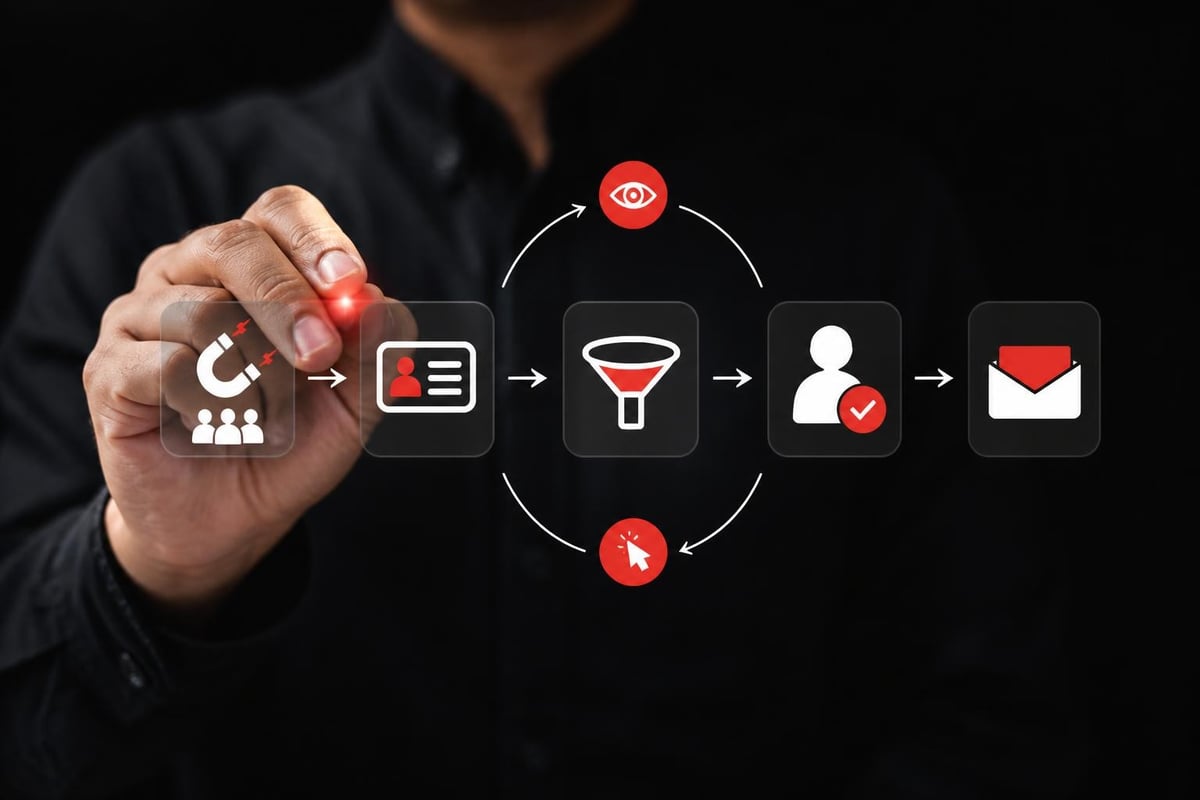
Building a Marketing Drip That Connects to Reality
A functional marketing drip requires more than an automation platform and a list of emails. It requires a connected system where the drip logic can access and respond to customer data across platforms.
Start with the Customer Journey, Not the Tool
Most drip campaigns are built backwards. Someone opens the automation platform, creates a workflow, and reverse-engineers a justification for it. Better approach: map the actual customer journey first.
| Stage | Trigger Event | Information Need | Desired Outcome |
|---|---|---|---|
| Awareness | Downloaded guide | What happens next; relevance check | Book a call or reply |
| Consideration | Attended webinar but didn't book | Case studies; proof | Meeting booked |
| Decision | Proposal sent | Objection handling; urgency | Signed agreement |
| Onboarding | Purchase completed | Setup steps; early value | Product adoption |
| Retention | 90 days since last login | Re-engagement offer; check-in | Active usage resumed |
Each stage has a different goal. A single drip sequence can't serve all of them. You need multiple sequences, each triggered by specific conditions and designed to move someone from one measurable state to another.
Forrester research on advanced lead nurturing highlights the shift from time-based drip sequences to behaviour-driven, multi-channel nurture journeys. The research is dense, but the core finding is simple: drip campaigns that respond to what someone does outperform those that simply count days since a trigger.
Define Clear Entry and Exit Conditions
A marketing drip should start for a reason and stop for a reason. Too many sequences run indefinitely or stop only when someone unsubscribes.
Entry conditions should be specific and observable:
- Contact downloaded [specific asset] and is tagged as [industry] and has not booked a meeting
- Purchase made in [product category] and onboarding status = incomplete
- Last website visit was >60 days ago and total contract value >$10,000
Exit conditions should be equally explicit:
- Meeting booked (pulled from CRM)
- Purchase completed (from eCommerce or billing platform)
- Marked as unqualified by sales
- Unsubscribed or marked as invalid email
- Converted to a different sequence (e.g., moved from lead nurture to customer onboarding)
Exit conditions require data integration. If your email platform doesn't know that someone booked a meeting in your CRM, the drip continues. If it doesn't know that an invoice was paid, the upsell sequence fires at the wrong time. Marketing stack interoperability solves this by connecting CRM, email, sales, and behavioural data so that drip logic reflects reality, not just platform activity.
Write for the Recipient's Context, Not Yours
Most marketing drip emails are written from the sender's perspective. "We're excited to share…" "Our latest feature…" "Don't miss this opportunity…"
The recipient doesn't care. They care about their problem, their timeline, and whether you understand where they are in the decision process.
A functional drip email should:
- Acknowledge what triggered the sequence. ("You downloaded the guide on [topic]. Here's what to do next.")
- Provide value before asking. (A useful resource, a clear answer, or a relevant case study.)
- Include one specific, low-friction next step. (Reply with a question. Book 15 minutes. Download the next resource.)
Personalisation helps, but only when it's based on real data. First name merge tags are table stakes. Personalisation that references industry, company size, previous engagement, or stated pain points requires connected systems and clean data.
Research into LLM-driven subject line personalisation shows measurable improvements in open rates when email titles are dynamically generated based on recipient behaviour and preferences. The approach is still experimental, but it points to a broader truth: generic drip emails are ignored. Contextual ones get read.
Measuring What Matters in a Marketing Drip
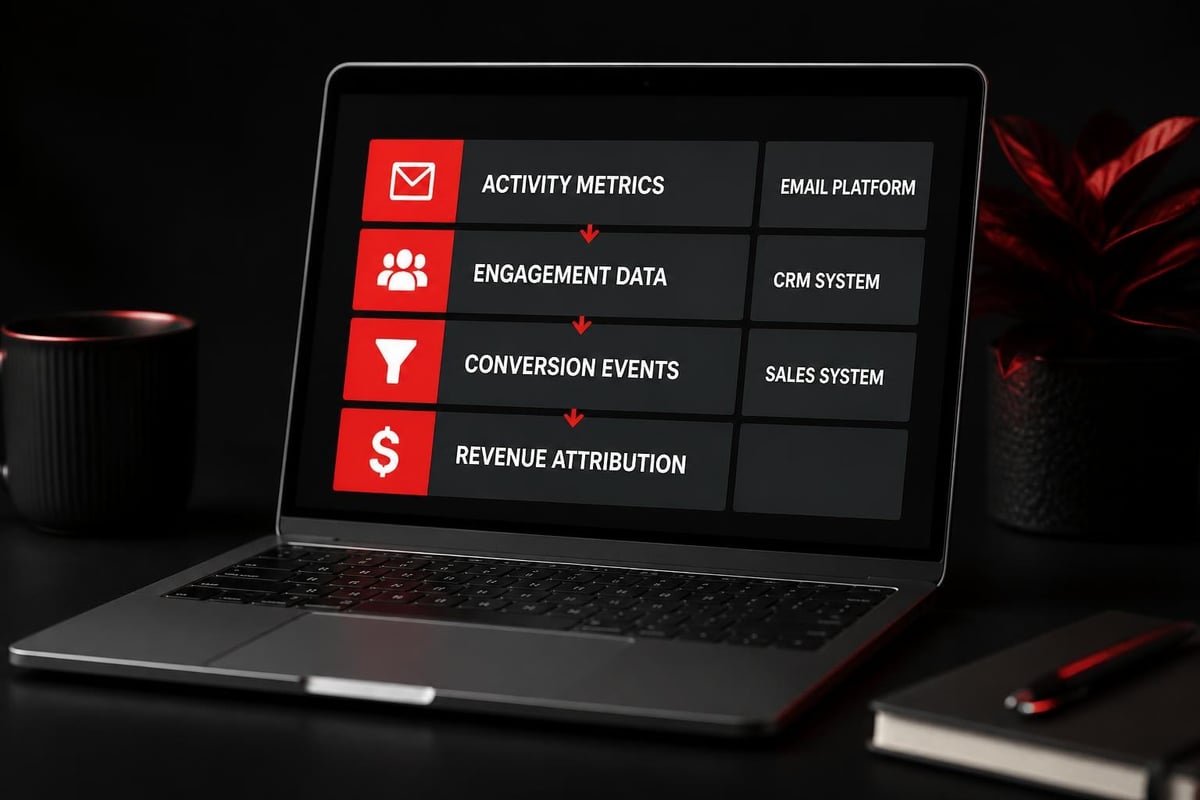
Open rates and click rates are not outcomes. They're activity metrics. A marketing drip exists to create a commercial result-booked meetings, qualified pipeline, completed onboarding, repeat purchases-and measurement should reflect that.
Connect Drip Performance to Revenue
To measure a marketing drip properly, you need to track:
- Who entered the sequence (and from which source)
- Which emails they opened or clicked (engagement layer)
- What action they took after engaging (CRM, sales, purchase data)
- What revenue or pipeline value resulted (attributed outcome)
This requires the drip platform to pass data to CRM and for CRM to pass revenue data back to reporting. Most businesses measure only the first two layers. The last two-where the commercial value lives-are invisible.
| Metric Layer | Example Metric | Where It's Tracked | What It Tells You |
|---|---|---|---|
| Activity | Emails sent, delivered, opened | Email platform | Whether the sequence is running |
| Engagement | Click-through rate, reply rate | Email platform | Whether content is relevant |
| Conversion | Meetings booked, trials started | CRM or product platform | Whether the sequence drives action |
| Revenue | Pipeline generated, deals closed, LTV | CRM + finance system | Whether the sequence creates value |
If you can't connect a marketing drip to revenue, you're guessing. And if you're guessing, you can't prioritise improvements or justify the time spent building sequences.
Test Structure, Not Just Copy
Most drip campaign testing focuses on subject lines, button colours, or send times. Those variables matter, but they're secondary to structural decisions.
Structural variables with bigger impact:
- Number of emails in the sequence (3 vs. 5 vs. 7)
- Time between emails (1 day vs. 3 days vs. 7 days)
- Content type (educational vs. social proof vs. direct ask)
- Trigger logic (time-based vs. behaviour-based)
- Exit conditions (manual vs. automated based on CRM status)
A/B testing at this level requires patience and clean data. You can't test sequence structure with a sample size of 50. You need hundreds of contacts, clear segmentation, and the discipline to let tests run long enough to produce statistically meaningful results.
Ascend2 research on email automation found that marketers consistently overestimate the effectiveness of their drip campaigns and underinvest in testing and optimisation. The gap isn't a knowledge problem. It's a system problem. Without proper measurement and integration, you can't see what's working.
Common Failures and How to Avoid Them
Most marketing drip campaigns fail quietly. They run in the background, consume resources, and produce little measurable value. Here's why.
Failure 1: No Segmentation Beyond the Trigger
Just because two people downloaded the same guide doesn't mean they need the same follow-up sequence. Company size, industry, role, and previous engagement all matter.
A 10-person business and a 500-person business don't have the same problems, timelines, or buying processes. Sending both the same drip sequence wastes the opportunity to be relevant.
Solution: Build segmentation into the entry logic. Create variant sequences for different personas, industries, or engagement levels. Use CRM data and behavioural signals to route contacts into the right path.
Failure 2: Drip Sequences That Never Stop
Many sequences are designed to run until someone unsubscribes. This creates two problems: message fatigue and reputational damage when the sequence keeps running after someone has already converted.
Solution: Define a maximum sequence length (e.g., 5 emails over 30 days) and build automated exit conditions based on CRM status, purchase events, or engagement thresholds. If someone hasn't engaged after email 5, suppress further sends and flag the contact for manual review or a different nurture path.
Failure 3: Ignoring Deliverability
A marketing drip that lands in spam delivers zero value. Yet many businesses build sequences without considering sender reputation, authentication protocols, or list hygiene.
Validity’s 2025 deliverability benchmark report shows that average inbox placement rates continue to decline, particularly for automated sequences sent at high volume. Technical controls-SPF, DKIM, DMARC, consistent sending patterns, low complaint rates-directly affect whether drip emails reach the inbox.
Solution: Treat deliverability as a system-level requirement, not an afterthought. Monitor bounce rates, spam complaints, and inbox placement. Warm up new sending domains gradually. Suppress unengaged contacts before they damage sender reputation. Mailgun’s infrastructure guidance provides operational detail on authentication and testing strategies that keep automated emails out of spam folders.
Failure 4: Measuring Activity Instead of Outcomes
Open rates are vanity metrics. A 40% open rate means nothing if the sequence generates zero pipeline. Yet many businesses optimise drip campaigns solely for engagement, not conversion.
Solution: Instrument the entire funnel. Track who enters each sequence, which emails drive clicks, what actions follow (CRM events, form submissions, calls), and what revenue results. Use cohort analysis to compare sequence performance across segments and time periods. Custom data visualisation connects email platform data, CRM records, and sales outcomes into dashboards that show which sequences create value and which are just noise.
How to Audit an Existing Marketing Drip
If you're already running drip campaigns, the first step isn't optimisation. It's audit.
Questions to Answer
- Which sequences are currently active? (You'd be surprised how many businesses don't know.)
- What triggers each sequence, and how many contacts have entered in the past 90 days?
- What are the defined exit conditions, and are they working? (Check for contacts who are still in a lead nurture sequence after becoming customers.)
- How many emails are in each sequence, and what is the time interval between them?
- What conversion events are tracked, and how are they attributed to specific sequences?
- What is the revenue or pipeline value generated by each sequence over the past quarter?
If you can't answer these questions with data, the sequences aren't truly managed. They're running on autopilot, and autopilot without instrumentation is guesswork.
Prioritise Based on Volume and Value
Not all sequences deserve equal attention. Prioritise optimisation based on:
- Volume: Sequences with the highest number of active contacts
- Value: Sequences linked to high-value customer segments or products
- Conversion rate: Sequences with the lowest conversion to desired outcome
- Complaints/unsubscribes: Sequences with above-average opt-out or spam complaint rates
Start with high-volume, high-value sequences that are underperforming. Fix the structural problems-segmentation, exit logic, content relevance-before tweaking subject lines.

Integrating Marketing Drip into a Connected System
A marketing drip is most effective when it's part of a connected growth system, not a standalone tool. That means integrating email automation with CRM, sales activity, advertising data, website behaviour, and customer support platforms. For how this plays out in a full acquisition pipeline, see our piece on client acquisition systems that actually work.
When these systems share data, drip logic can respond to real-time context:
- A prospect visits your pricing page three times in one week. The nurture sequence accelerates, and sales is notified.
- A customer opens a support ticket. The upsell drip is paused until the issue is resolved.
- A lead downloads two resources in different topic areas. They're routed into a hybrid sequence that addresses both interests.
- A contact books a meeting. All active drip sequences are suppressed, and a pre-meeting preparation email is triggered instead.
This level of coordination requires data flow between platforms and business rules that define how systems should respond to state changes. It's not complex conceptually. It's operationally demanding.
Litmus’s guide to email marketing strategy emphasises the importance of aligning email programs-including drip sequences-with broader customer journey strategy and using testing, segmentation, and cross-platform data to improve outcomes. The advice is practical and relevant for businesses managing multiple sequences across different customer stages.
The Role of CRM in Drip Campaign Logic
CRM is the system of record for customer state. It knows who is a lead, prospect, customer, or closed-lost. It tracks sales stage, opportunity value, and next actions. A marketing drip that can't access this data is flying blind.
CRM integration enables:
- Dynamic segmentation based on lead score, sales stage, or account type
- Automated suppression when a contact converts, is marked unqualified, or is assigned to a sales rep
- Attribution that connects sequence engagement to pipeline and revenue
- Trigger logic based on CRM events (e.g., opportunity created, deal won, renewal date approaching)
Without CRM integration, drip campaigns are limited to email platform data-opens, clicks, and form submissions. With it, they become part of a coordinated customer journey.
Building for Maintenance, Not Just Launch
A marketing drip isn't a "set and forget" asset. Customer journeys change. Product messaging evolves. Sequences that worked last year may be irrelevant now.
Successful drip programs are maintained. That means:
- Quarterly reviews of active sequences, performance data, and exit/suppression logic
- Content updates when offers, product features, or positioning change
- Segmentation refinement as customer data improves and personas evolve
- Technical audits to confirm triggers, integrations, and deliverability controls are functioning
Businesses that treat drip campaigns as "one and done" end up with a growing inventory of orphaned sequences that run unmonitored, consume sending reputation, and confuse recipients.
Documentation Prevents Chaos
Every marketing drip should be documented:
- Sequence name and purpose
- Entry trigger and segmentation logic
- Exit conditions (manual and automated)
- Number of emails and timing intervals
- Links to email templates and creative assets
- Performance benchmarks and review schedule
- Owner responsible for updates and monitoring
Without documentation, knowledge lives in one person's head. When they leave, the sequences become black boxes. Zapier’s guide to drip campaign examples includes practical templates and workflow ideas that can be adapted and documented for different use cases, making it easier to maintain consistency across sequences.
Marketing drip campaigns work when they're connected to real customer data, designed around measurable outcomes, and maintained as part of a broader growth system. Most businesses have the tools but lack the integration, instrumentation, and discipline to turn sequences into revenue. If your drip campaigns are running in isolation-disconnected from CRM, sales, and customer behaviour-you're automating noise, not growth. touchpoint.systems audits, connects, and optimises the platforms and workflows that turn marketing drip from theory into measurable commercial outcomes.