
Most established businesses treat channel distribution in marketing as a media planning exercise: which platforms should carry our message, and how much budget should each receive? That framing misses the point entirely. Channel distribution is about how prospects and customers flow through connected systems, and whether those systems reliably convert attention into revenue. The channel is not just where you advertise. It is where prospects enter, how they are qualified, what happens to their data, how sales receives them, and whether any of that connects.
What Channel Distribution in Marketing Actually Means
Channel distribution in marketing refers to the combination of routes, platforms, and mechanisms through which a business reaches, acquires, and converts prospects into customers. It includes advertising channels (search, social, display, email), the technical systems that capture and route leads (forms, CRM, automation), the sales channels that close deals (direct, partner, self-serve), and the data infrastructure that connects them.
The term originates in physical distribution theory, where manufacturers choose retail, wholesale, or direct channels to move goods. In marketing, the principle is identical: you are distributing access to your business and moving prospects toward a transaction. The difference is that modern channel distribution depends on data flow, not physical inventory.
Most failures in channel distribution in marketing stem from treating channels as independent broadcast mechanisms rather than connected systems. A prospect clicks a LinkedIn ad, fills a form, waits three days for follow-up, receives generic nurture emails unrelated to the ad they clicked, and is eventually called by a salesperson with no context. The channels existed. The distribution failed.
The Difference Between Channel Selection and Channel Distribution
Channel selection is choosing where to invest: Google Ads, Meta, LinkedIn, email, SEO, events, partnerships. Channel distribution is the operational system that ensures prospects from those channels are captured, qualified, routed, and converted without loss or delay.
You can select the right channels and still lose half your pipeline because:
- Form submissions are not routed to CRM in real time
- Sales cannot see which ad, keyword, or content the prospect engaged with
- Nurture sequences are disconnected from the channel that generated the lead
- There is no feedback loop showing which channels produce revenue, not just clicks
Channel distribution in marketing only works when platforms, data, and workflows are connected by design. That requires marketing infrastructure that can handle lead capture, attribution, automation, and handover without manual intervention or guesswork.
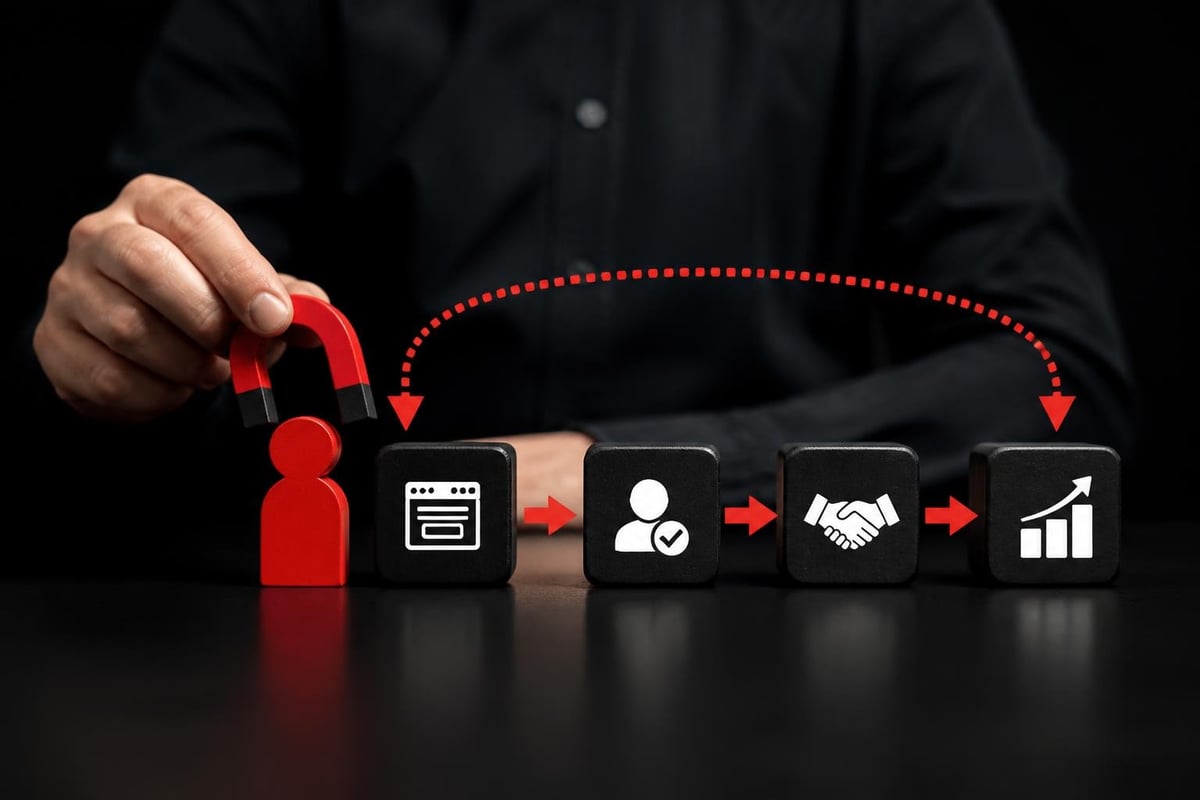
How Channel Mix Affects Distribution Strategy
Your channel mix determines not only where prospects come from but also how they behave, what they expect, and how quickly they need to be handled. A prospect from a comparison search term behaves differently to one from a brand awareness video campaign. Channel distribution in marketing must account for intent, readiness, and context.
| Channel Type | Typical Intent | Expected Speed | Distribution Requirement |
|---|---|---|---|
| Paid search (high intent) | Ready to evaluate or buy | Immediate | Real-time lead routing, same-day contact |
| Social prospecting | Early awareness, browsing | Days to weeks | Automated nurture, segmentation by engagement |
| Email (warm list) | Existing relationship | Hours to days | Personalised follow-up, context from CRM |
| Organic search | Research, comparison | Variable | Fast response to high-intent terms, nurture for informational queries |
| Partnerships/referrals | Trusted introduction | Immediate to days | Prioritised routing, partner attribution |
The new rules of marketing across channels emphasise coordinated messaging and unified customer data. That coordination depends on distribution systems that can route, personalise, and track across every channel without manual stitching.
Established businesses often run campaigns across six or more channels simultaneously. Without connected systems, each channel operates in isolation: separate tracking, separate nurture, separate reporting, and no unified view of the customer. That fragmentation does not improve when you add more channels. It worsens.
Where Channel Distribution Typically Breaks
The failure points in channel distribution in marketing are predictable:
- Lead capture – Forms, chatbots, and calls are not connected to CRM or are delayed by manual data entry.
- Attribution – No reliable record of which channel, campaign, or keyword generated the lead.
- Routing – Leads land in a generic queue or inbox; sales cannot prioritise by channel quality or intent.
- Handover – Marketing passes leads to sales without context, campaign history, or engagement data.
- Feedback – Sales outcomes are not fed back to marketing platforms, so optimisation is based on clicks and cost per lead rather than revenue.
These are not technology problems in the sense that better software solves them. They are system design problems. The platforms exist. The data exists. The connection does not.
A marketing systems audit exposes where channel distribution is failing before more budget is wasted on campaigns that generate leads but not customers.
Building a Connected Distribution System
Channel distribution in marketing improves when every platform and process is connected through reliable data flow and shared customer records. That does not require complex or expensive technology. It requires deliberate design and disciplined implementation.
Start with the customer journey – not the marketing funnel you wish existed, but the actual path prospects take from first contact to closed deal. Map every touchpoint:
- Where do they enter (channels)?
- What happens when they submit a form or make contact?
- How is their data captured, enriched, and routed?
- What do they receive next (automation, sales contact)?
- How does sales know what the prospect has seen, clicked, or downloaded?
- Where does data flow break or require manual intervention?
Most businesses discover significant gaps. Prospects from paid search are handled the same as cold outbound. Email automation does not connect to CRM contact records. Sales has no visibility into campaign engagement. Attribution stops at the click.
The Role of CRM in Channel Distribution
Your CRM is the central distribution hub. Every channel should flow into it. Every customer record should include channel source, campaign, keyword, content engagement, and lifecycle stage. Sales, marketing, and customer service should work from the same data.
That only happens when:
- Forms, ads, email platforms, and chat tools are integrated with CRM in real time
- Lead scoring and routing rules operate automatically based on channel quality and behaviour
- Attribution is tracked from first touch through to closed revenue
- Automation platforms and CRM share contact data bidirectionally
Many established businesses have a CRM. Few use it as a distribution system. It becomes a glorified contact list because the connections, workflows, and data hygiene required for effective distribution are missing.
Stack interoperability is what enables CRM to function as the centre of channel distribution in marketing. Without it, you are running parallel systems that never converge into a unified customer view.
Measurement and Optimisation Across Channels
Channel distribution in marketing cannot be optimised without measurement that connects investment to outcome. Most businesses measure activity (impressions, clicks, form fills) or intermediate metrics (cost per lead, email open rates). Neither tells you which channels produce customers or profit.
Effective measurement requires:
- Attribution models that assign credit across the full customer journey, not just last click
- Revenue tracking connected to CRM and sales systems so marketing platforms know which leads closed
- Channel profitability analysis that accounts for conversion rates, sales cycle length, and customer lifetime value by source
- Feedback loops that allow automated bidding, budget allocation, and targeting to optimise for revenue rather than volume

Digital advertising now dominates traditional channels, but the shift to digital has not automatically improved measurement. Many businesses still track digital channels like they tracked print or radio: spend in, enquiries out, with no connection to closed deals or profit.
Common Mistakes in Channel Performance Measurement
Optimising for cost per lead without tracking lead quality by channel. Cheap leads from broad targeting or low-intent keywords clog the pipeline and waste sales time. If CRM and sales data are not fed back to advertising platforms, the algorithm optimises for volume, not value.
Ignoring multi-touch attribution. Prospects typically interact with multiple channels before converting. First-touch attribution overvalues awareness channels; last-touch ignores everything that built trust and intent along the way. Neither supports smart distribution decisions.
Reporting channel performance without accounting for sales cycle or LTV. A channel that produces fewer leads but shorter sales cycles and higher retention may be far more profitable than a high-volume, low-quality source.
Running campaigns without closed-loop reporting. If marketing cannot see which leads became customers, and sales cannot see which campaigns prospects engaged with, both teams optimise blindly.
Measurement must connect advertising spend, lead capture, CRM, sales outcomes, and customer revenue in one system. That requires platform integration, clean data, and reporting designed for decision-making rather than vanity metrics.
Channel Distribution and Organisational Structure
Channel distribution in marketing often fails because responsibility is fragmented. Advertising is managed by one team, CRM by another, sales by a third. Email automation, website forms, and data reporting sit with different people or agencies. No one is accountable for the entire system.
Successful channel distribution requires:
- Unified ownership of the customer journey from first contact through to closed deal and retention
- Shared goals across marketing, sales, and operations focused on revenue and customer acquisition cost, not impressions or MQLs
- Connected systems that allow every team to see the same customer data and journey history
- Regular review of channel performance, attribution, and system health by a cross-functional group with authority to change budget allocation and process
Many businesses attempt channel distribution improvements by adding more platforms or hiring specialists for each channel. That increases complexity without improving connection. The problem is not capability. It is structure.
Forrester’s research on segmentation and targeting highlights the importance of coordinated execution across channels. That coordination is organisational as much as technical.
What Platform-Agnostic Really Means
Being platform-agnostic in channel distribution in marketing does not mean refusing to commit to tools. It means designing systems based on customer journey and business process first, then selecting platforms that serve those requirements rather than forcing workflows to fit tool limitations.
Most established businesses inherit a stack of platforms chosen incrementally over years. Each solves a point problem (email, CRM, ads, analytics, chat) but does not connect to the others. Distribution suffers because data cannot flow, and no single platform can replace the entire system.
The solution is not to rip out and replace everything. It is to audit the existing stack, identify where data flow breaks, and connect platforms through integration, automation, or middleware. The best channel distribution systems use boring, reliable tools connected intelligently.
Channel Distribution for Different Business Models
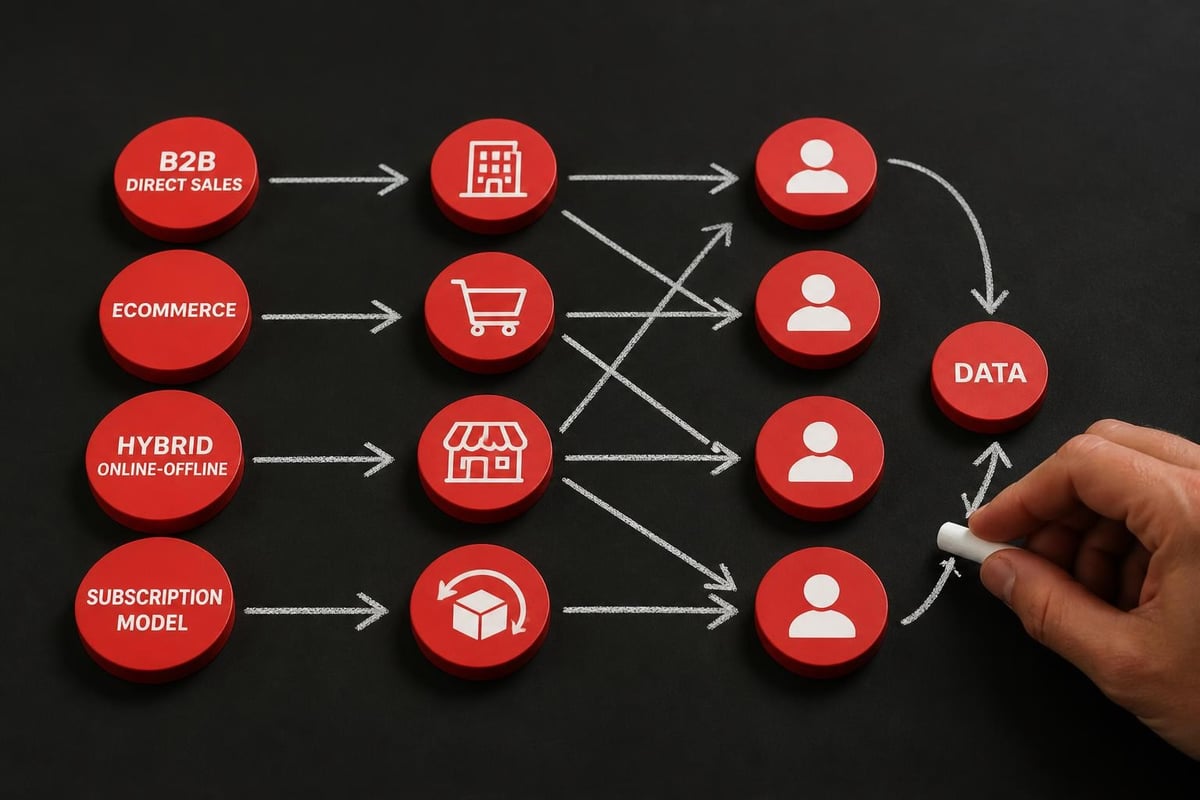
How you design channel distribution in marketing depends on whether you sell directly, through partners, online, offline, or some combination.
Direct B2B (complex sales process):
- Channels: Paid search, LinkedIn, email, events, referrals
- Distribution requirement: Fast lead routing to sales, full attribution and engagement history in CRM, automated nurture for unqualified leads, closed-loop reporting from opportunity to revenue
Transactional eCommerce:
- Channels: Google Shopping, Meta retargeting, email, SEO, affiliates
- Distribution requirement: Product feed accuracy, dynamic retargeting based on cart and browse behaviour, post-purchase automation, attribution across devices and sessions
Hybrid (online enquiry, offline close):
- Channels: Search, display, email, partnerships, retail or field sales
- Distribution requirement: Lead routing to local or specialist sales reps, mobile CRM access, appointment scheduling integrated with calendar and CRM, attribution that connects digital lead source to offline sale
Subscription and SaaS:
- Channels: SEO, paid search, content marketing, partnerships, product-led growth
- Distribution requirement: Trial sign-up integration with CRM and product data, automated onboarding sequences, usage-based lead scoring, churn prediction and retention campaigns
Each model requires different platform connections, data flows, and automation. Channel distribution in marketing is not a template. It is a system tailored to how your business acquires, qualifies, and converts customers.
Practical Steps to Improve Channel Distribution
Improving channel distribution in marketing begins with diagnosis, not deployment. Most businesses do not need more channels or platforms. They need the ones they have to work together.
Step 1: Map the current state
Document every channel, platform, and handover point from prospect entry to closed customer. Identify where data is captured, where it flows, where it stops, and where manual work fills gaps.
Step 2: Identify failure points
Where do leads get lost, delayed, or mishandled? Where does attribution break? Where do sales and marketing work from different data? Where are decisions made without feedback from outcomes?
Step 3: Prioritise connections by impact
Not every integration is equally valuable. Focus first on connecting high-volume or high-value channels to CRM, enabling real-time lead routing, and feeding closed revenue data back to advertising platforms.
Step 4: Automate handovers and nurture
Replace manual email follow-up, spreadsheet tracking, and unstructured lead allocation with automated workflows triggered by form submission, campaign engagement, or lifecycle stage changes.
Step 5: Build feedback loops
Ensure sales outcomes, customer data, and revenue are visible to marketing systems. Use that data to adjust targeting, bidding, messaging, and budget allocation.
Step 6: Measure what matters
Track cost per acquisition, conversion rates by channel, sales cycle length, customer lifetime value, and profitability. Report these metrics to the people who control budget and strategy.
IBM’s research on optimizing distribution channels reinforces the value of process clarity and data-driven channel decisions. Distribution improves when the system is designed and measured as a whole, not optimised in parts.
When to Rebuild vs. When to Connect
Some businesses need to rebuild their channel distribution system from the ground up. Most just need to connect what they already have. The decision depends on how broken the current state is and whether the core platforms are fit for purpose.
Rebuild when:
- Core platforms (CRM, marketing automation, website) cannot integrate or scale
- Data quality is so poor that cleaning it costs more than starting fresh
- The business model has fundamentally changed and the current stack was built for a different customer journey
- Multiple systems perform overlapping functions with no clear owner or integration path
Connect when:
- Platforms are sound but do not share data reliably
- Manual work is filling gaps that integration or automation could close
- Attribution, routing, or reporting are incomplete but the underlying systems capture the required data
- The stack works in parts but fails as a whole
Most established businesses fall into the second category. The platforms are capable. The connections are not. Fixing channel distribution in marketing often requires relatively simple integrations, automation rules, and data hygiene rather than wholesale replacement.
Investing in conversion rate optimisation is pointless if leads generated by improved conversion are lost in broken handovers or unconnected systems. Distribution must work before optimisation delivers value.
Channel Distribution and Customer Experience
From the customer’s perspective, your business is one entity. They do not care which team manages which platform or where data lives. They expect consistent messaging, fast response, and context when they engage.
Poor channel distribution in marketing creates customer experience failures:
- A prospect downloads a whitepaper and receives unrelated email sequences because the content platform does not share data with the automation tool
- A lead submits an enquiry form and waits days for follow-up because routing is manual or broken
- A sales rep calls without knowing the prospect attended a webinar, clicked three emails, and visited the pricing page twice
- A customer receives prospecting ads after they have already bought
These failures are not rare. They are normal in businesses where channel distribution is treated as a set of independent campaigns rather than a connected system.
Good distribution improves experience by ensuring every touchpoint is informed by previous interactions, every handover is seamless, and every message is relevant. That requires platforms that share data, automation that preserves context, and workflows designed around the customer journey.
The Intersection of Distribution, Infrastructure, and Automation
Channel distribution in marketing depends on reliable infrastructure. Forms must submit. APIs must connect. Data must flow. Automation must trigger. Websites must load. Email must deliver. When infrastructure fails, distribution stops.
Many businesses underinvest in the technical foundations that support channel distribution. They spend heavily on advertising and content but run campaigns on fragile websites, poorly configured CRM systems, unreliable integrations, and automation that breaks without warning.
Infrastructure is not glamorous, but it is the difference between channel distribution that scales and one that collapses under load or requires constant manual intervention. Marketing infrastructure must be built and maintained with the same discipline as sales or operations.
Automation extends infrastructure by removing repetitive tasks and ensuring consistency. When a lead submits a form, automation can:
- Create or update the CRM contact record
- Assign the lead to the appropriate sales rep based on territory, product, or score
- Send a confirmation email tailored to the campaign source
- Add the contact to a nurture sequence
- Notify sales via Slack or email if the lead meets priority criteria
- Log the event for attribution and reporting
None of that requires human input. It happens instantly, reliably, and at scale. But only if the infrastructure and integrations are in place.
Effective channel distribution in marketing is about systems, not slogans. It requires connected platforms, clean data, automated workflows, and measurement focused on revenue rather than activity. When advertising, CRM, sales, and customer service operate from the same data and support the same journey, distribution works. When they do not, budget is wasted and prospects are lost. touchpoint.systems audits, connects, and optimises the platforms and processes that turn attention into customers, ensuring your marketing system works as one connected whole rather than a collection of expensive silos.